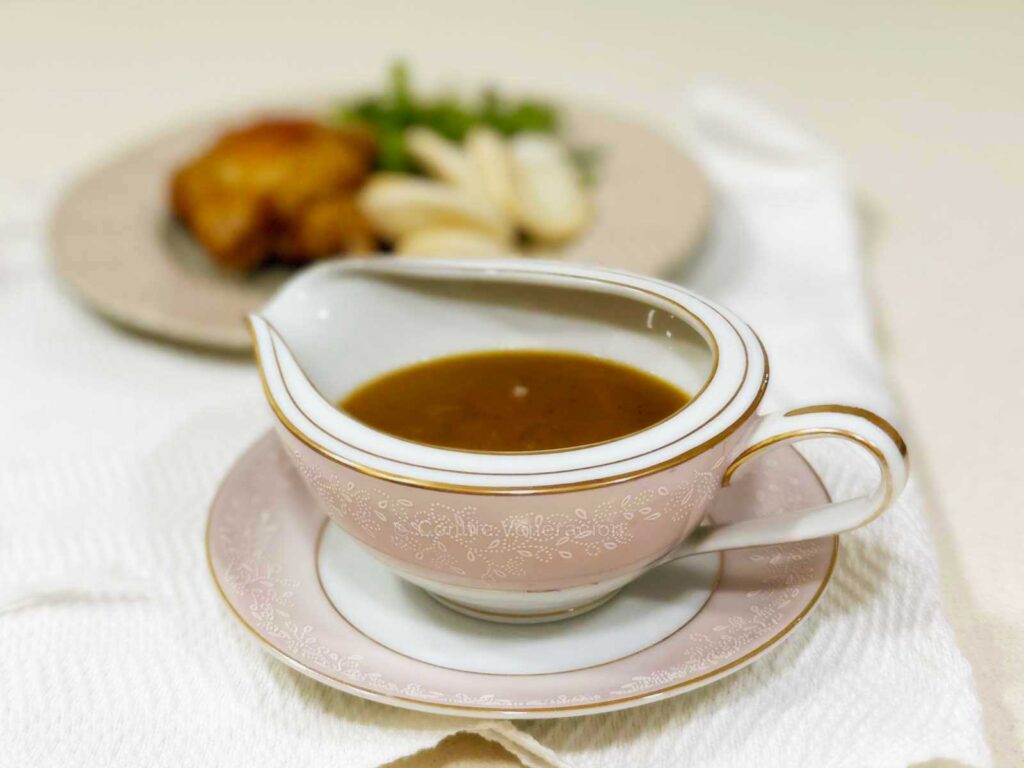
It’s that tableware that looks like a squat pitcher. A shallow oblong bowl with a spout on one end and a handle on the other. It’s been in use long before Marie Antoinette sat on the French throne.
With roast turkey being at the center of the American Thanksgiving dinner, it follows that there would be gravy served on the side. And gravy, more often thank not, is served in a gravy boat, as it came to be known in the United States.
We don’t observe Thanksgiving in the Philippines but, in my family, we’ve adopted a new tradition. Four families gather for dinner and drinks on the Saturday after U.S. Thanksgiving. We’ve been doing it for about ten years minus the three-year interruption caused by the pandemic. So, last Saturday, there was a whole roast pig, callos, spring rolls and — for the first time — a whole roast turkey with mashed potatoes, cranberry sauce and, of course, gravy.
So, I thought I’d write about gravy boat. I call it a gravy boat because that’s the term I grew up with. The Philippines was colonized by the United States, not France, so it’s gravy boat. It goes by two other names, however. It is sometimes called a sauce boat or a saucière.
But what’s so special about a gravy boat anyway? From a utilititarian perspective, probably nothing. Any bowl can be used to serve sauce or gravy in. Just pair the bowl with a ladle. It’s really more practical because there will be far less gravy drippings on the table.
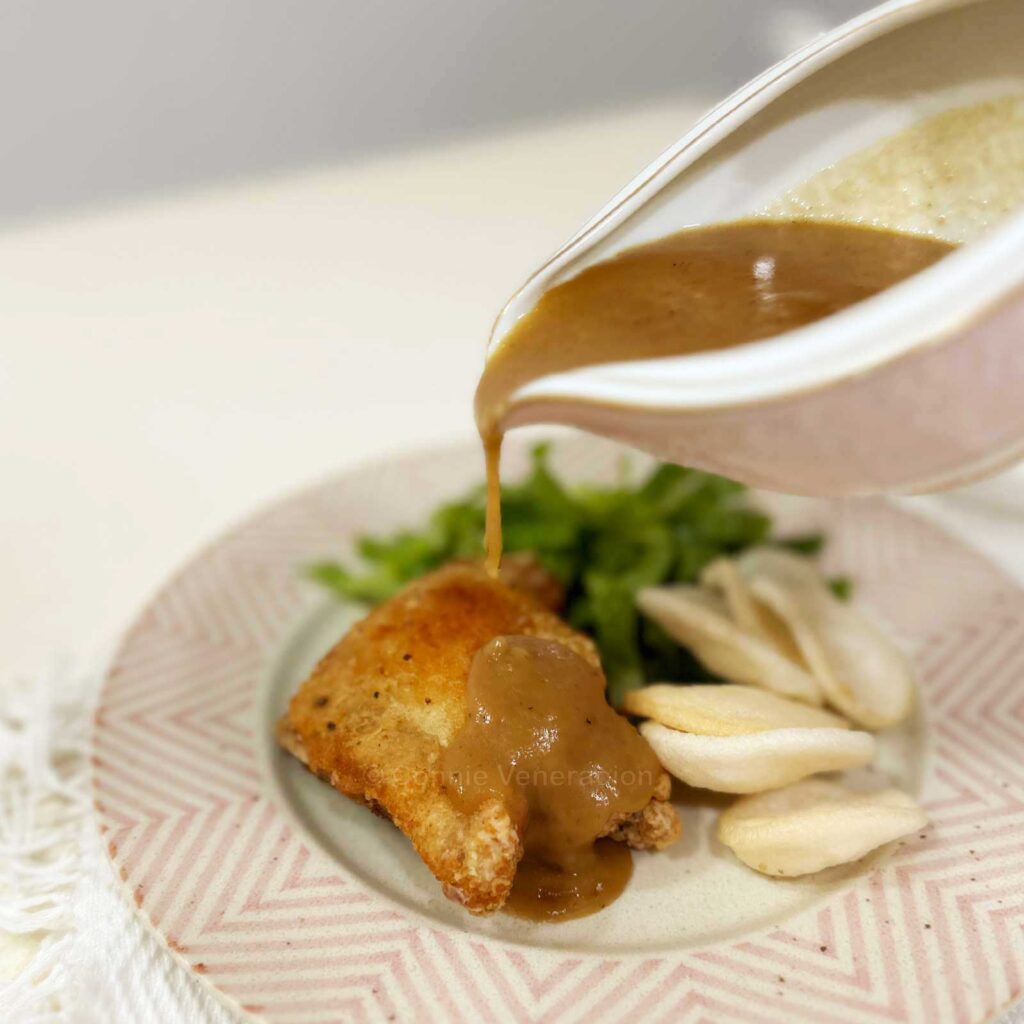
The gravy boat as we know it today, in its physical form and how it is used, is more fashion than utility. Sauce bowls, in one shape or another, has been used since ancient times. But the sauce bowl with handle did not make an appearance until the late 17th century — in the French court, mind you, and not in the average household. And, at the time, the bowl was silver, had two handles and two spouts.
France being the center of European fashion, use of the gravy boat soon found its way into England. But the English did not just stop at adding the sauce vessel on their dinner tables. Pretty soon, they started manufacturing it in porcelain. As it became accessible to the middle classes, the far too elaborate designs were set aside in favor of simpler form and lines.
It’s not hard to guess how the use of the gravy boat reached America. France and England both colonized what is now the United States. And when the latter colonized the Philippines, a generation of baby boomers counted the gravy boat as an essential piece of tableware.

 What do Nancy Wheeler, Grace Hart and Tess McGill have in common?