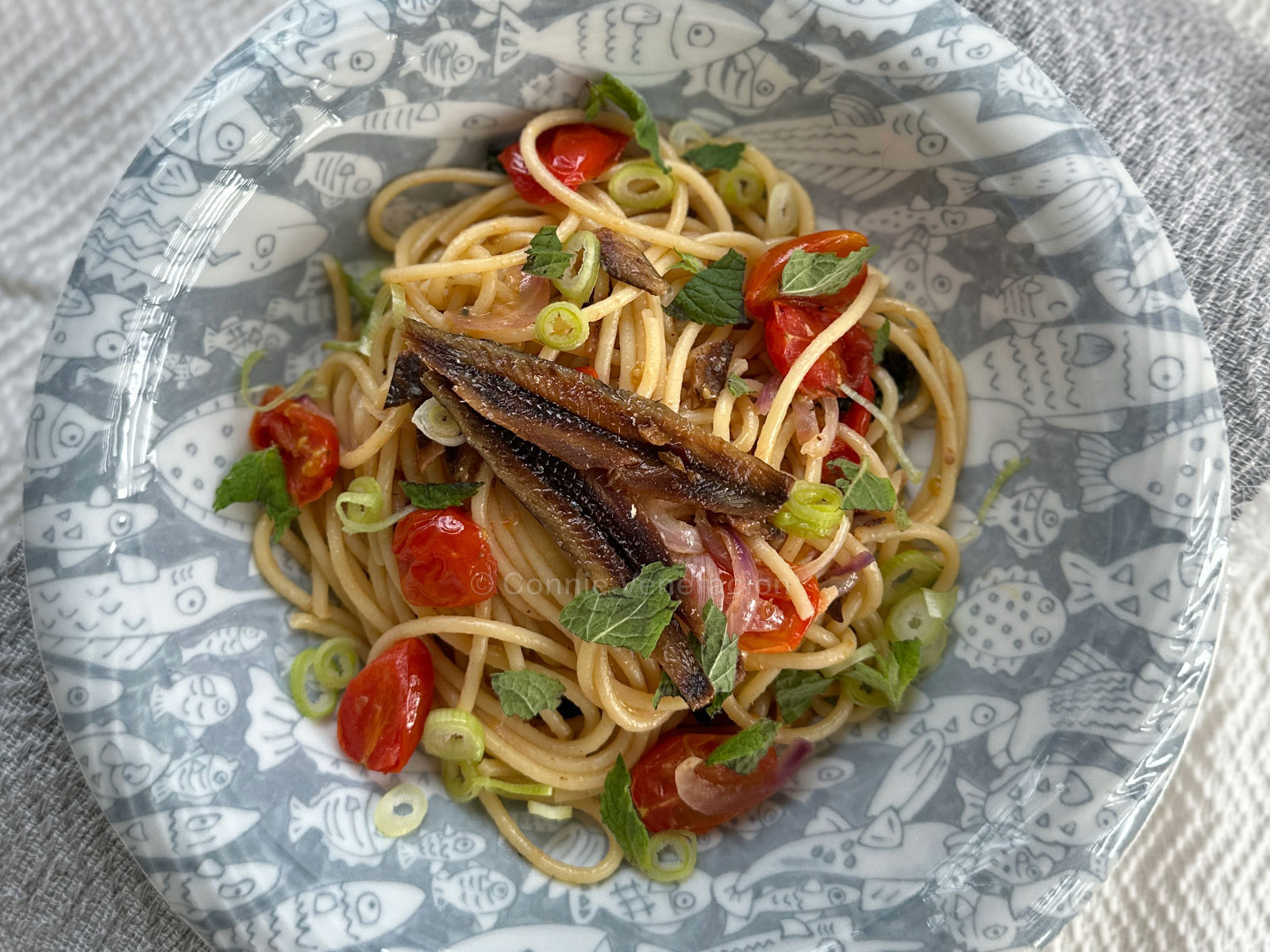
Warning: This is not a recipe. The photo above is the most recent one I took with fish in it, so it’ll have to do. This story has something to do with fish and theft.
Anyone who has been publishing for a long time knows very well how rampant plagiarism is on the web. You publish a recipe, someone rewrites it by changing a few descriptive words, and the thief claims authorship. All before AI. So, yes, the thieves were very much human and, often, in the same industry. People stealing from peers. Today, AI just swallows up everything, but that’s another story for another time.
Earlier today, I encountered a different level of plagiarsm. My daughter, Alex, showed me a reel on Instagram of a fish being cut, then filleted, then sliced for sushi or sashimi. The three segments — cut, fillet and slice — each came with one-third of a quote.
He who works with his hands is a laborer.
He who works with his hands and his brain is a craftsman.
He who works with his hands and his brain and his heart is an artist.
The quote was attributed to someone named Marcus (I can’t remember his second and last names).
The visual was stunning — minimalist with muted lighting. The message was clear (or clearly snobbish, take your pick). When everything is combined, it gives you pause.
“That’s nice,” I said. My daughter agreed.
I was so captivated by the quote that I decided to write about it and cite its author. I started a search for the full name of Marcus. I typed “He who works with his hands is a laborer” in Chrome and the results showed St. Francis of Assisi to whom the following is attributed.
He who works with his hands is a laborer.
He who works with his hands and his head is a craftsman.
He who works with his hands and his head and his heart is an artist.
St. Francis of Assisi, poet and philosopher, and founder of the Franciscan Order, was born in 1181 and died in 1226. So, in 2026, or 800 years after his death, in the most accepted translation of something he said, the word “head” is replaced with “brain” and someone named Marcus is now credited with having delivered the same message.

 How the British obsession with tea shaped Hong Kong